Best THC Gummies for Pain in 2026: Top 5 Brands Reviewed for Long-Lasting Relief
Shopping for THC gummies for pain is complicated. Similar-looking jars can contain very different doses, cannabinoids, and extracts. And while edibles often produce effects lasting six to eight hours, that doesn't mean they'll provide pain relief for the same amount of time.
We compared five hemp-derived Delta 9 gummies using labels, formulations, prices, and lab information. This does not prove that any brand treats pain. Here's the shortlist:
- BudPop - Best Overall: 15 mg Delta 9 THC in a live resin gummy.
- Exhale Wellness - Best Potency Options: several standard Delta 9 bottle strengths.
- TRĒ House - Best Budget Pick: peach-pear gummies with a 1:1 THC-to-CBD ratio.
- namaCBD - Best for Nighttime Comfort: a five-cannabinoid Pain Plus blend.
- Cycling Frog - Best for Consistent Relief: 1:1 THC/CBD gummies made with solventless rosin.
Key Takeaways
Seven Points Worth Remembering
- BudPop tops this editorial ranking for transparent dosing and its live resin format, not clinically proven superior relief.
- Edible effects may last six to eight hours or longer; the onset, intensity, and effect on pain vary from person to person.
- Full-spectrum THC gummies contain additional plant compounds, but the entourage effect hasn't been shown to improve pain outcomes for these products.
- If someone chooses to try THC, low exposure matters. Even 2.5–5 mg can cause intoxication, and taking more too soon increases risks.
- Look for a recent, batch-matched certificate of analysis (COA) covering potency and contaminants.
- THC ratios describe what's in a gummy; they don't identify a proven treatment for a specific type of pain.
- Check current federal and state rules. A significant federal hemp-law change is scheduled for November 12, 2026.
Quick Comparison of the Top Five
| Brand | Best For | THC per Gummy | Supporting Cannabinoids | Price (USD) | Standout Detail |
|---|---|---|---|---|---|
| BudPop | Best Overall | 15 mg | Minor cannabinoids; live resin | $89.95 / 30 | 450 mg per jar; potency COA |
| Exhale Wellness | Best Potency Options | 15 mg in live resin line | Hemp-derived live resin | From $69.95 standard; $99.95 live resin | Standard bottles: 225, 450, 600 mg total |
| TRĒ House | Best Budget Pick | 10 mg | 10 mg full-spectrum CBD | Approx. 25–50 | Peach-pear 1:1 formula |
| namaCBD | Best for Nighttime Comfort | 10 mg | CBD, CBC, CBG, CBN | From $49 | Five-cannabinoid Pain Plus |
| Cycling Frog | Best for Consistent Relief | 10 mg | 10 mg CBD; Hawaiian Haze rosin | $13.99 / 10 select flavors; $45.99 / 40 | Solventless rosin; batch COAs |
Best THC Gummies for Pain Relief: Ranked & Reviewed
1BudPopBest Overall THC Gummies for Pain
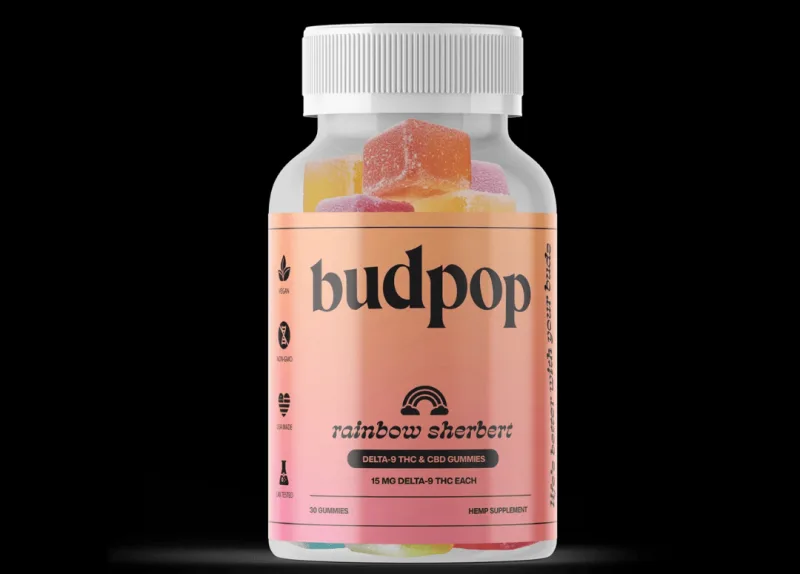
BudPop earns the top spot for straightforward product information. Each cube contains 15 mg of hemp-derived Delta 9 THC, and a 30-count jar lists 450 mg total for $89.95. The brand uses full-spectrum live resin, produced from flash-frozen hemp, and mentions trace minor cannabinoids.
In our review: The appeal is the clear potency label and accessible lab information, rather than a verified pain-relief advantage. Fifteen milligrams is a substantial serving, particularly for beginners. Natural fruit flavors and pectin are listed; taste is personal.
Pros
- Clearly labeled THC content per piece and per jar.
- Live resin extract, natural fruit flavors, and vegan pectin.
- QR-accessible potency testing.
Cons
- A full 15 mg piece may be overwhelming for inexperienced users.
Key features
- Free shipping advertised on qualifying orders above $99.
- Advertised 30-day money-back guarantee.
- US-grown hemp and third-party ISO-lab testing claimed by the brand.
- Listed customer rating of 4.85/5 from 20 reviews; a small sample, not medical evidence.
At roughly $3 each, BudPop may interest adults seeking a stronger live resin product with a COA. Still, more THC doesn't necessarily mean better pain control, and anyone worried about drug interactions or impairment should talk with a healthcare professional first.
2Exhale WellnessBest Potency Options THC Gummies for Pain
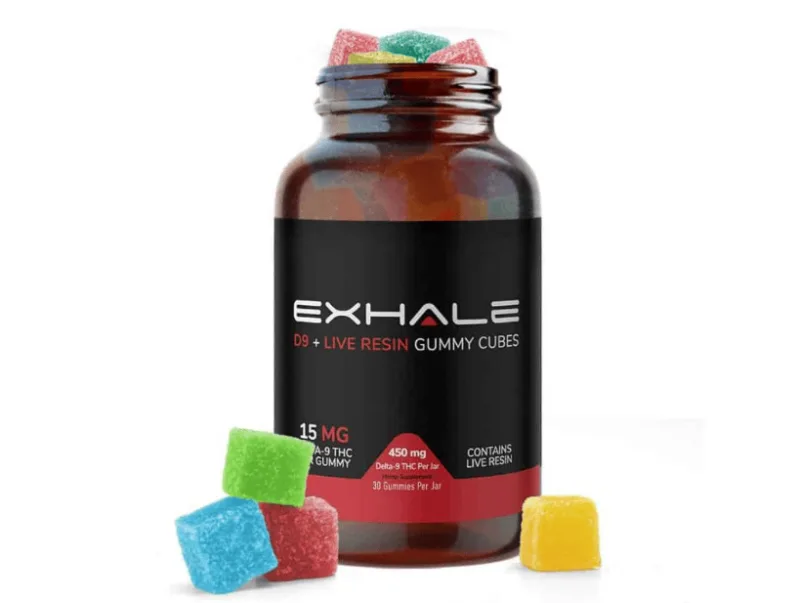
Exhale Wellness stands out for its range of package strengths. The standard Delta 9 line lists 225 mg, 450 mg, and 600 mg total-bottle options, with prices starting around $69.95. A separate live resin formula offers 15 mg THC per gummy, 30 pieces, for $99.95.
In our review: Choice is Exhale's strongest advantage. Just remember that a 600 mg bottle doesn't mean 600 mg in one gummy. Check both the piece strength and the total cannabinoid content; the standard and live resin listings aren't interchangeable. We couldn't verify the brand's specific pain-relief timing claims.
Pros
- Several total-bottle strengths in the standard line.
- Distinct 15 mg live resin option.
- Public COA link for the live resin product.
Cons
- Product variations and different prices can be confusing.
Key features
- Free shipping advertised above $80.
- Live resin option with natural fruit flavors and pectin.
- The live resin jar contains 450 mg THC across 30 pieces.
- Third-party testing claimed; review the latest relevant COA.
Exhale makes sense for shoppers comparing formats within one brand. The live resin extract may contain more of the plant's original compounds, but that alone doesn't show it works better for pain than standard Delta 9 gummies.
3TRĒ HouseBest Budget-Friendly THC Gummies for Pain
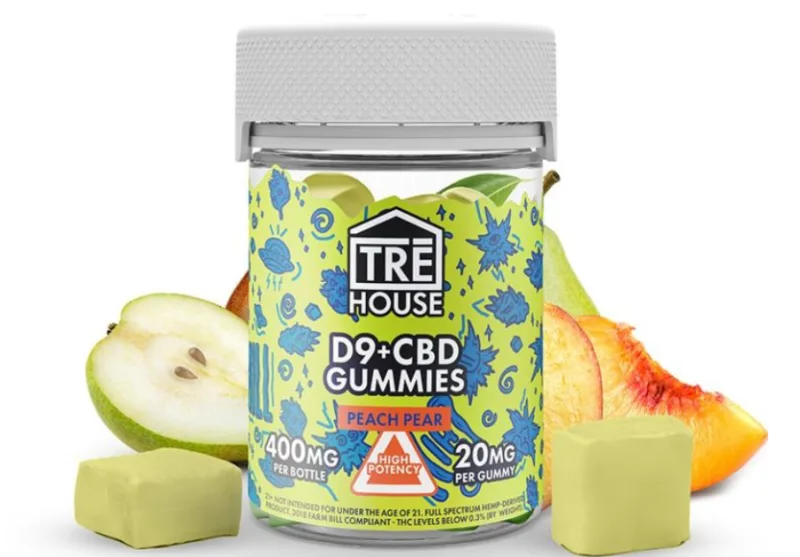
TRĒ House offers a simpler proposition: each peach-pear gummy combines 10 mg Delta 9 THC with 10 mg full-spectrum CBD. The product appears in 20- and 40-count formats, with advertised prices around 25–50 depending on the selection.
In our review: The balanced ratio, approachable fruit flavor, and lower entry price make this product notable. However, 10 mg THC can still feel strong. CBD doesn't cancel out intoxication, and splitting a gummy doesn't guarantee perfectly even halves.
Pros
- Equal labeled amounts of THC and CBD.
- Two package sizes and a relatively accessible price range.
- Vegan and gluten-free positioning.
Cons
- Shipping eligibility, current prices, and batch testing need checking.
Key features
- 10 mg THC plus 10 mg CBD per gummy.
- 20- and 40-count packages advertised.
- Independent ISO-lab testing claimed by the seller.
- Hemp-derived Delta 9 marketed under the 2018 Farm Bill standard.
TRĒ House is worth comparing if a 1:1 formula appeals to you, but don't assume the ratio guarantees less anxiety or improved pain relief. Compare the price per gummy, not just the cost of the jar, and verify the actual batch report.
4namaCBDBest THC Gummies for Nighttime Comfort
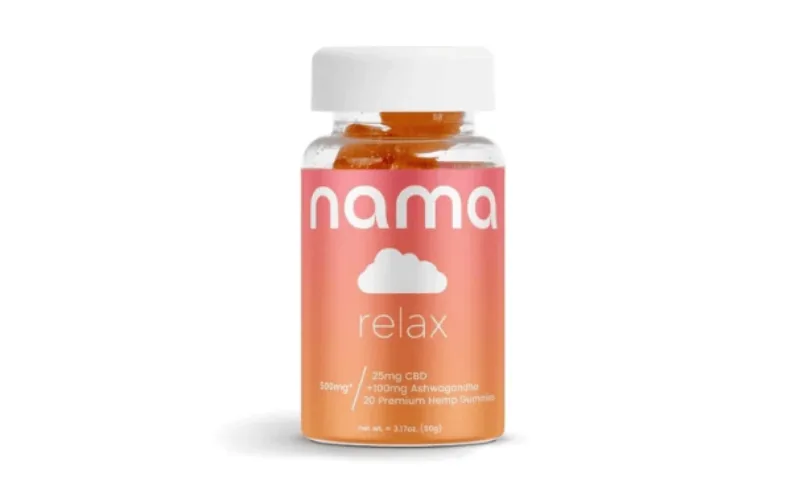
namaCBD's Pain Plus Gummies have the most detailed cannabinoid blend in this group. One gummy lists 10 mg THC, 10 mg CBD, 10 mg CBC, 5 mg CBG, and 5 mg CBN. A 20-count option starts at $49.
In our review: Clear milligram amounts are a welcome change from vague “proprietary blend” claims. The tangerine flavor may appeal to some shoppers. Although CBN is often associated with bedtime products, evidence doesn't establish that this particular combination improves sleep or relieves pain.
Pros
- Specific amounts for five cannabinoids.
- Public library of product COAs.
- USA-grown hemp, vegan, and gluten-free claims.
Cons
- More ingredients increase complexity without proving better results.
Key features
- Pain Plus pricing starts around $49.
- Free shipping advertised for eligible locations.
- Limited satisfaction guarantee with conditions.
- State and age restrictions apply.
It may interest adults researching nighttime formulas. Still, THC can cause next-morning drowsiness, and added cannabinoids may complicate interactions. Persistent sleep problems or pain deserve medical attention rather than relying on an edible alone.
5Cycling FrogBest THC Gummies for Consistent Relief
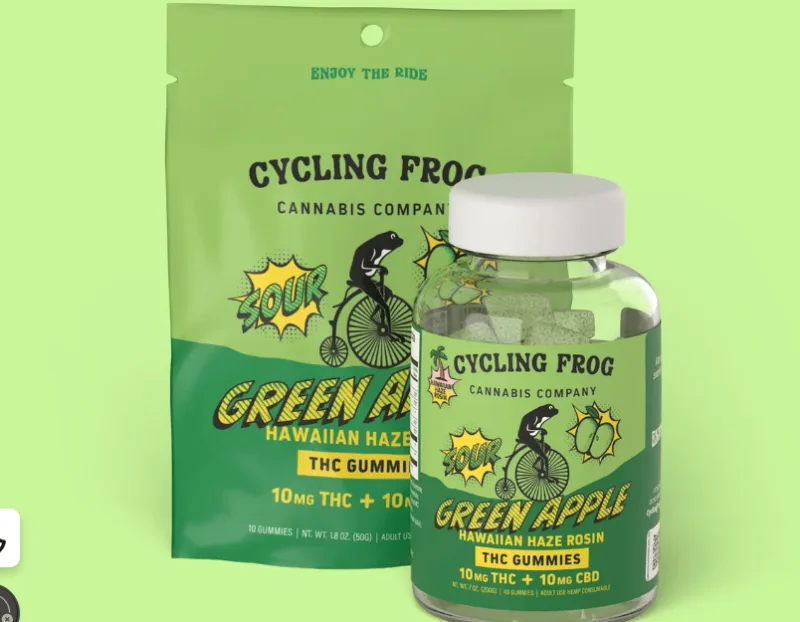
Cycling Frog's Sour Green Apple x Hawaiian Haze Rosin Gummies combine 10 mg Delta 9 THC and 10 mg CBD per piece. They use solventless rosin and come in 10- and 40-count options; a 40-count jar was listed at $45.99.
In our review: The 1:1 formula and easy-to-find batch reports help this product stand out. The brand estimates an onset of 45 minutes to two hours and a duration of roughly one to four-plus hours for this SKU. That's a useful reminder that not every edible follows a six-to-eight-hour schedule.
Pros
- Simple, clearly labeled THC ratio.
- Solventless rosin made using heat and pressure.
- Batch-linked lab certificates.
Cons
- A fixed 10 mg THC piece isn't ideal for precise low-dose adjustments.
Key features
- 10 mg THC and 10 mg CBD per gummy.
- 10- and 40-count sizes; some 10-count flavors priced at $13.99.
- Free shipping advertised above $59.
- Vegan, gluten-free, non-GMO claims and Oregon-grown hemp.
Solventless extraction may matter to someone comparing manufacturing processes, but it doesn't automatically make a gummy safer or more effective. Lab testing and accurate labels still carry more weight than extraction buzzwords.
How We Ranked the Best THC Gummies for Pain
We prioritized information shoppers can actually verify, rather than dramatic relief claims:
- Cannabinoid profile: exact THC and other cannabinoid amounts per gummy.
- Lab reports: independent, batch-specific potency and contaminant results.
- Hemp source: traceable US sourcing where documentation is available.
- Ingredients: sugar, pectin or gelatin, allergens, and added ingredients.
- Reviews: patterns in genuine feedback, without treating ratings as clinical proof.
- Transparency: easy-to-identify SKUs, batch dates, and refund policies.
- Manufacturing: documented quality controls and reputable laboratory credentials.
- Value: price per gummy and per 10 mg THC, including shipping.
- Experience: realistic flavor and texture descriptions, not guaranteed relief times.
What Are THC Gummies?
Hemp-Derived Delta 9 in Plain English
THC gummies are edible products containing tetrahydrocannabinol, usually Delta 9 THC. They look like ordinary candy, but THC can affect perception, coordination, and judgment. Hemp-derived and marijuana-derived Delta 9 are the same intoxicating molecule; the difference is primarily legal classification.
The 2018 Farm Bill defined qualifying hemp using a 0.3% Delta 9 THC dry-weight limit. That doesn't mean every hemp edible is legal everywhere. Federal food rules, state laws, and upcoming changes also matter.
How THC Gummies for Pain Work
After you swallow a gummy, THC is absorbed through digestion and processed by the liver, which creates the psychoactive metabolite 11-hydroxy-THC. Effects usually take longer to appear than with inhaled cannabis: commonly 30 minutes to two hours, sometimes more.
Because absorption is gradual and unpredictable, taking another gummy before the first peaks can lead to excessive intoxication. Some edible effects last six to eight hours or longer. That's a description of THC's time course, not a promise of continuous pain relief.
Can THC Gummies Help with Pain?
What Current Research Says
Some cannabis-based medicines have shown small short-term benefits for certain chronic pain conditions, especially neuropathic pain. A federally funded 2025 review described modest average improvements with a balanced THC oral spray, alongside more dizziness, nausea, and sedation.
But that spray isn't a store-bought gummy. Product composition, doses, and clinical testing differ. A 2026 Cochrane review also emphasized uncertainty about meaningful benefits, particularly with THC-dominant medicines. Claims that a retail gummy reliably treats arthritis, back pain, or fibromyalgia go beyond the evidence.
The Endocannabinoid System: CB1 and CB2
THC mainly interacts with cannabinoid receptors called CB1 and CB2. CB1 activity in the nervous system contributes to intoxication and can change how pain feels. CB2 participates in immune signaling. CBD acts differently, but it cannot be counted on to eliminate THC's side effects.
These biological pathways help explain scientific interest in cannabinoids. They do not prove that any specific gummy is an effective treatment.
Limitations of the Research
Pain studies differ in size, duration, diagnoses, and cannabinoid formulations. Pharmaceutical products used in trials may have little in common with consumer gummies containing live resin, rosin, or multiple minor cannabinoids. Some participants discontinue treatment because of adverse effects. It's important to separate promising early findings from established medical uses.
What Experts at NCCIH and CDC Emphasize
US public-health sources, including NCCIH and the CDC, describe the pain evidence as limited and benefits as generally modest or uncertain. They don't endorse these brands as treatments. Pain that's persistent, unexplained, or getting worse deserves a professional evaluation.
Types of Pain THC Gummies May Be Used For
People look into THC gummies for pain relief for many reasons, but the evidence varies:
- Chronic pain: average improvements with some cannabinoid medicines are modest.
- Arthritis and joint pain: gummies-specific evidence is insufficient.
- Muscle soreness: feeling relaxed isn't the same as faster recovery.
- Back pain: symptom reports don't address structural causes.
- Neuropathic pain: more studied than many other pain types, with limited benefits.
- Fibromyalgia: findings are mixed and preliminary.
- Menstrual cramps: reliable studies of retail gummies are scarce.
The cause of pain matters. A product advertised for “all-day relief” shouldn't replace diagnosis or an established care plan.
THC vs CBD Gummies for Pain
| Feature | THC Gummies | CBD-Only Gummies |
|---|---|---|
| Why people choose them | Intoxicating relaxation; altered pain perception | Non-intoxicating wellness preferences |
| Psychoactive high | Yes | Generally no, if truly THC-free |
| Typical onset | About 30 minutes–2 hours | Often similar, though effects may be subtle |
| Duration | Often 6–8 hours; variable | Variable; no proven pain-relief window |
| Legal considerations | Federal and state THC rules | FDA food rules and state restrictions still apply |
Which Works Better for Pain?
There isn't a universal winner in THC vs CBD gummies. Some THC-containing medications show small benefits for neuropathic pain, while CBD alone hasn't consistently improved chronic pain in controlled studies. More THC also increases the possibility of impairment. A clinician can help identify better-supported options for a particular diagnosis.
Should You Combine THC and CBD in a 1:1 Ratio?
A 1:1 gummy contains equal milligrams of THC and CBD-for example, 10 mg of each. Many shoppers like that balance, but CBD doesn't reliably prevent anxiety, intoxication, or driving impairment. No specific THC ratio has been proved best for treating pain.
What About the Entourage Effect?
The entourage effect is the idea that cannabinoids and terpenes may act together differently than isolated compounds. It's an interesting research question, not an established reason to expect more relief from a full-spectrum gummy. Look for measured ingredients and COAs before relying on broad “synergy” claims.
Full-Spectrum vs Broad-Spectrum vs THC Isolate
| Extract Type | Typical Contents | THC Present? | What to Verify |
|---|---|---|---|
| Full-spectrum | Several cannabinoids and terpenes | Usually, sometimes trace | Actual cannabinoid amounts |
| Broad-spectrum | Multiple compounds with THC reduced or removed | Intended to be absent or minimal | COA detection limits |
| THC isolate / distillate-forward | THC as the main active cannabinoid | Yes | Dose, additives, contaminants |
Which One Is Better for Pain?
No extract is clearly proven superior. Live resin generally comes from fresh-frozen cannabis material; rosin is made with heat and pressure rather than extraction solvents. The processes can influence flavor and chemical composition, but neither guarantees better outcomes. Compare finished products, their doses, and independent testing—not just the extraction label.
Best Cannabinoids to Look for Besides THC
- CBD: non-intoxicating, but oral CBD alone hasn't reliably reduced chronic pain.
- CBG: a minor cannabinoid with preliminary human evidence.
- CBC: limited direct research into pain outcomes.
- CBN: common in nighttime formulas, though sleep evidence remains limited.
- THCV: sometimes promoted for focus; strong pain-specific evidence is lacking.
A long ingredient list may sound impressive, but it also makes effects and interactions harder to predict. Accurate amounts matter more than the number of cannabinoids advertised.
Best THC Ratios for Different Pain Needs
These are common product categories, not medical dosing recommendations:
- Low THC, around 1-2.5 mg: less exposure, but side effects are still possible.
- Moderate THC, around 5 mg: potentially intoxicating even for adults.
- Higher THC, 10-20 mg: greater impairment risk without guaranteed extra relief.
- 1:1 THC:CBD: equal amounts of each compound.
- 2:1 CBD:THC: twice as much CBD as THC.
- High-CBD: more CBD than THC, though not a validated treatment ratio.
Indica vs Sativa vs Hybrid: Daytime and Bedtime
Indica, sativa, and hybrid labels don't reliably predict how an edible will feel. “Indica” doesn't guarantee sleep, and “sativa” doesn't guarantee daytime focus. The measured THC dose, other ingredients, and individual sensitivity are more useful guides. Even a gummy marketed for daytime use can impair concentration.
How to Choose the Best THC Gummies for Pain
Eight Steps Before Considering a Purchase
- Define your goal. Is the issue general comfort, sleep disruption, or a diagnosed condition?
- Check THC per gummy. Don't confuse a bottle's total with one serving.
- Consider sensitivity. Prior anxiety or little cannabis experience increases uncertainty.
- Read the COA. Match the batch number and review potency and contaminants.
- Compare other cannabinoids. Look for precise amounts, not vague claims.
- Work out the cost. Include quantity, shipping, and actual serving strength.
- Check local laws and drug-testing requirements. Hemp-derived THC can test positive.
- Ask about medical interactions. Persistent pain and prescription use warrant professional advice.
A trustworthy seller also provides clear ingredients, customer contact information, and understandable shipping and return terms. Treat guaranteed claims about curing arthritis or nerve pain as red flags.
Recommended THC Dosage for Pain Relief
| Experience Level | Commonly Discussed THC Amount | Important Consideration |
|---|---|---|
| Beginner | 2.5–5 mg | Even these amounts can cause anxiety or impairment |
| Intermediate | 5–10 mg | Response depends on sensitivity and tolerance |
| Experienced | 10–20 mg | Higher risk doesn't imply greater pain relief |
There's no clinically established dose of retail THC gummies that consistently treats chronic back pain, arthritis, or fibromyalgia. These ranges describe marketplace usage, not a prescription. A 15 mg BudPop gummy, for example, shouldn't be considered a routine starting serving.
Dose Adjustment Tips
For adults who choose to use a legal edible, conservative dosing and patience are essential. Effects may begin after 30 minutes to two hours, then continue building. Avoid combining THC with alcohol, sleep aids, or sedatives, and don't take another dose just because the first seems slow. Ask a clinician or pharmacist about prescription interactions.
What If You Take Too Much?
Stop consuming THC and stay in a safe, quiet place with a sober adult. Don't drive. Seek urgent medical care for chest pain, breathing trouble, severe confusion, repeated vomiting, injury, or inability to stay awake. For accidental ingestion by a child or pet, contact emergency services or poison control immediately. US Poison Control: 1-800-222-1222.
How Long Do THC Gummies Take to Work?
From First Bite to the Following Morning
Most edibles begin affecting people within 30 minutes to two hours. Peak effects can arrive later, sometimes one to three hours after ingestion. Six to eight hours is a familiar estimate, but experiences range widely; Cycling Frog's featured rosin SKU even suggests approximately one to four-plus hours.
Timing depends on metabolism, food, THC strength, tolerance, other medications, and individual sensitivity. Body weight alone doesn't predict a safe dose. Residual impairment may continue after the most noticeable effects fade, so there's no reliable “safe to drive at hour six” rule.
Potential Benefits of THC Gummies for Pain
Why Some Adults Consider This Format
Gummies don't involve smoking, and reputable labels provide measured milligrams per piece. They're discreet and often longer-lasting than inhaled cannabis. Some people also report relaxation or better sleep-related comfort, while certain studied cannabis medicines have offered modest symptom improvements.
The trade-off is less control once an edible has been swallowed. A long duration can be inconvenient or unsafe, especially when driving or working the next morning. Retail products shouldn't be treated like prescription medicines with established effectiveness for a specific condition.
Possible Side Effects and Risks
What to Watch For
THC gummies can cause dry mouth, dizziness, nausea, anxiety, panic, a racing heart, confusion, sleepiness, and impaired coordination. Higher doses may intensify these effects, and frequent use can lead to tolerance or dependence.
Alcohol, sedatives, and some medications may increase risks. THC can also trigger a positive drug test. Product labels aren't always accurate, and candy-like packaging makes accidental ingestion a serious concern. Keep gummies locked in their original child-resistant container, away from children and pets.
Who Should Avoid THC Gummies?
THC should be avoided during pregnancy and breastfeeding. Products intended for adults 21+ aren't appropriate for minors. People with a history of psychosis, significant heart problems, severe previous cannabis reactions, or problematic substance use should discuss risks with a qualified clinician. New severe pain, fever, weakness, or neurological symptoms need medical attention rather than self-treatment.
THC Gummies vs Other Pain Relief Methods
| Method | Typical Onset | Possible Duration | Convenience | Smoke-Free? |
|---|---|---|---|---|
| Gummies / edibles | 30 min–2 hr | Often 6-8 hr; variable | Premeasured; difficult to adjust after ingestion | Yes |
| Smoking cannabis | Minutes | Often 2-4 hr | Fast feedback, combustion exposure | No |
| Vaping cannabis | Minutes | Often 2-4 hr | Fast feedback, aerosol exposure | No smoke, but aerosol |
| THC tinctures | Around 15–45 min sublingual; longer if swallowed | Several hours | Flexible, but dropper accuracy matters | Yes |
| Topicals | Variable | Variable | Local application; evidence depends on formula | Yes |
Smoking and vaping act faster but bring respiratory exposure concerns. Gummies avoid inhalation yet take longer and are harder to adjust. Tinctures offer dosing flexibility, while topicals are usually applied locally. For persistent pain, physical therapy, suitable exercise, psychological therapies, and clinician-guided treatments may have stronger evidence depending on the diagnosis.
Are THC Gummies Legal?
Federal Hemp Laws and the November 12, 2026 Change
The 2018 Farm Bill distinguished hemp using a limit of 0.3% Delta 9 THC by dry weight. That definition didn't override federal food rules or individual state restrictions. As of October 19, 2026, provisions in Public Law 119-37 are scheduled to change the federal hemp definition on November 12, 2026.
Among other changes, the provision concerns final hemp-derived cannabinoid products containing more than 0.4 mg of combined total THC and similar-effect cannabinoids per retail container. If it takes effect as scheduled, the multi-milligram gummies reviewed here would no longer fit the revised federal hemp category. Separately, the FDA restricts adding THC or CBD to foods sold in interstate commerce. Verify current law rather than relying on a brand's “Farm Bill compliant” badge.
State Cannabis Laws Still Matter
States vary in permitted THC content, age limits, licensing, shipping rules, and outright restrictions. An online store accepting your address isn't proof that purchasing or possessing the product is legal. Check official rules for your location before placing an order.
Hemp-Derived vs Marijuana-Derived THC
Delta 9 THC has the same chemical structure and intoxicating properties regardless of plant source. State-regulated marijuana products may follow different licensing and testing systems. Neither origin makes a gummy an approved medical treatment.
Travel with THC Gummies
Don't assume a product legally purchased at home can cross state borders or travel on a plane. Check the destination's laws, applicable TSA and airline guidance, and rules for federal property. Never carry THC products internationally without verified legal authorization.
FAQs About Best THC Gummies for Pain
What Are the Best THC Gummies for Pain in 2026?
Our editorial list puts BudPop first for labeling and live resin documentation, followed by Exhale Wellness, TRĒ House, namaCBD, and Cycling Frog. That's a comparison of products, not a clinical effectiveness ranking.
Can THC Gummies Reduce Chronic Back Pain?
Some users report feeling more comfortable, but retail gummies haven't been established as a treatment for back pain or its underlying causes. Persistent symptoms deserve evaluation.
How Long Do THC Gummies for Pain Relief Last?
Effects often last around six to eight hours, sometimes longer. Pain relief, if any, may follow a different timeline, and impairment can persist.
Are Full-Spectrum Gummies Better Than Isolate?
Not necessarily. Full-spectrum products contain additional compounds, but convincing evidence of superior pain relief is lacking. Verified potency and safety testing matter more.
Is Delta 9 the Same as Marijuana THC?
Yes. Hemp-derived and marijuana-derived Delta 9 are chemically identical and can both cause intoxication.
Will THC Gummies for Nighttime Help Me Sleep?
They may cause drowsiness, but that doesn't guarantee better sleep quality. Next-day grogginess and tolerance are real possibilities; adding CBN isn't proof of a sleep benefit.
Can Beginners Take a 10 mg or 15 mg THC Gummy?
Those can be strong doses for someone new to THC. Even 2.5–5 mg may cause impairment. Medical conditions and medications add reasons for caution.
Do THC Gummies Appear on Drug Tests?
Yes. Tests can detect THC metabolites regardless of whether the Delta 9 came from hemp or marijuana.
Are Live Resin and Live Rosin the Same Thing?
No. Live resin generally involves extraction from fresh-frozen material, often with solvents. Rosin uses heat and pressure. Neither process guarantees better pain relief.
Can I Legally Order These Gummies After November 12, 2026?
Don't assume so. A scheduled federal definition change could exclude many multi-milligram hemp products, and state restrictions still apply. Check the laws in effect when ordering.
Final Verdict: Where to Buy the Best THC Gummies for Pain Relief in 2026?
Which of the Five Belongs on Your Shortlist?
BudPop leads for its transparent 15 mg live resin offering. Exhale Wellness has several bottle-total options; TRĒ House offers a competitively priced 1:1 formula; namaCBD provides a clearly quantified five-cannabinoid blend; and Cycling Frog emphasizes solventless rosin and batch-level testing.
The best THC gummies for pain aren't necessarily the strongest, most expensive, or most complex. None of these brands has proved that its retail gummies provide superior medical pain relief. Before buying, consider the THC dose, request a current COA, check local laws and the scheduled federal change, and speak with a clinician if pain is ongoing.
 (504) 224-9555

 Mon-Fri 10am-6pm CST